
Anti Discrimination and Harassment: A Workplace Guide

Workplace Guide to Anti Discrimination and Harassment
A fair and just workplace is built on strong principles of anti discrimination and harassment. These concepts are crucial for keeping your organization compliant and your team thriving.
For quick reference, here’s what they mean:
- Anti-Discrimination: This means preventing unfair treatment of employees or job applicants based on protected characteristics like race, color, religion, sex (including pregnancy, sexual orientation, and gender identity), national origin, age (40 or older), disability, or genetic information. It’s about equal opportunity for everyone.
- Anti-Harassment: This means preventing unwelcome conduct that is based on those same protected characteristics. Harassment becomes unlawful when it’s severe or widespread enough to create an intimidating, hostile, or abusive work environment, or when enduring it becomes a condition of employment.
This guide draws on the workplace-compliance and training experience of EEO Training LLC, which helps organizations address harassment, discrimination, and related compliance requirements.
Understanding these protections isn’t just about following the law. It’s about building a respectful culture where everyone feels safe and valued. The U.S. Equal Employment Opportunity Commission (EEOC) enforces federal laws, like Title VII of the Civil Rights Act, that prohibit such unfair treatment. Ignoring these issues can lead to serious legal and financial problems, and hurt your company’s reputation and morale.
This guide will walk you through the essential details you need to know.
Understanding the Legal Landscape of Anti-Discrimination and Harassment
This section defines the key legal concepts, protected groups, and standards that form the basis of workplace fairness laws.
What Constitutes Workplace Discrimination and Harassment?
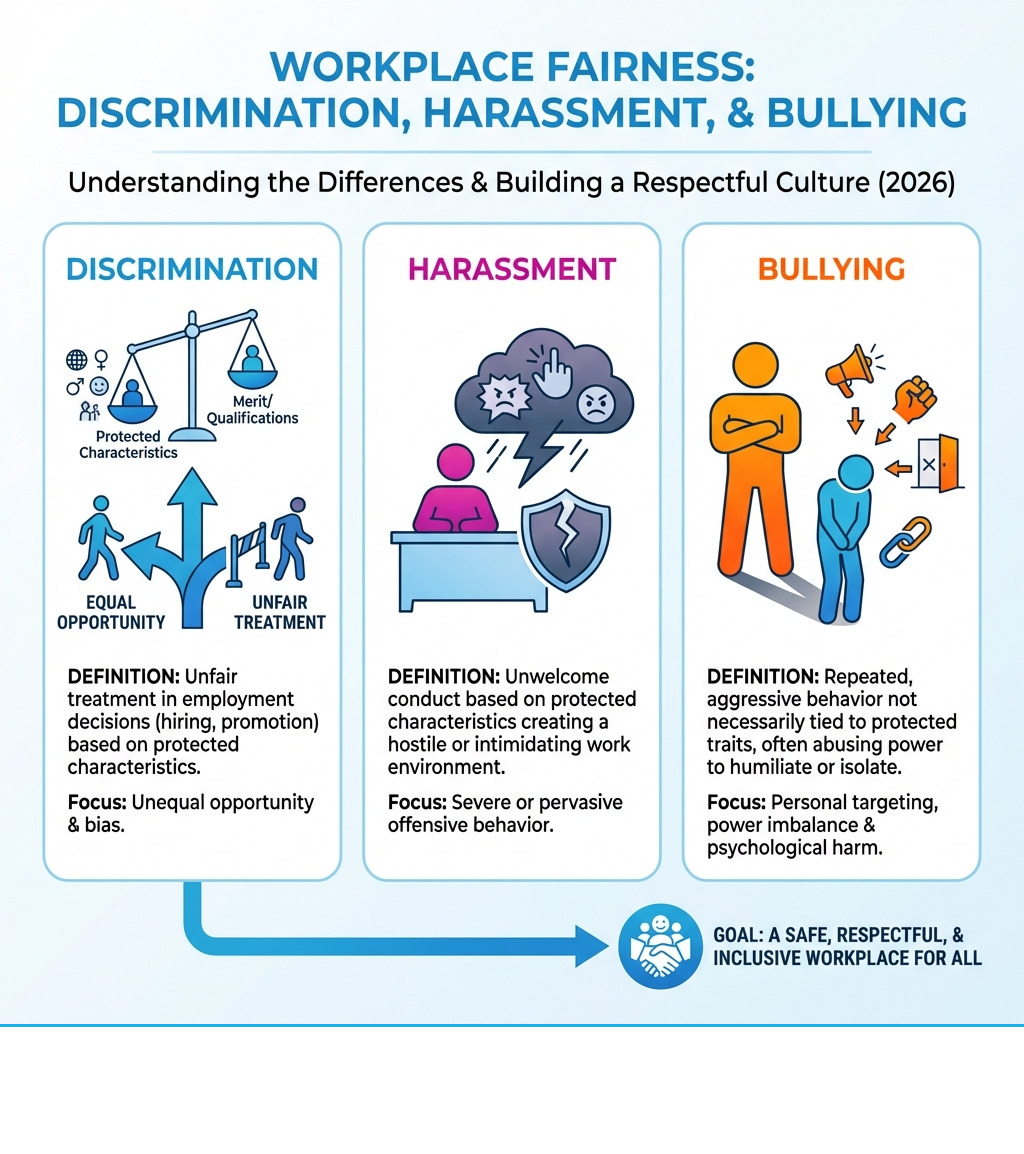
At the heart of anti discrimination and harassment efforts lies a clear understanding of what these terms mean. While often used interchangeably, they have distinct legal definitions.
Workplace Discrimination is unfair treatment in any aspect of employment—like hiring, firing, or promotion—based on a person’s protected characteristic (e.g., race, sex, age) instead of their merit.
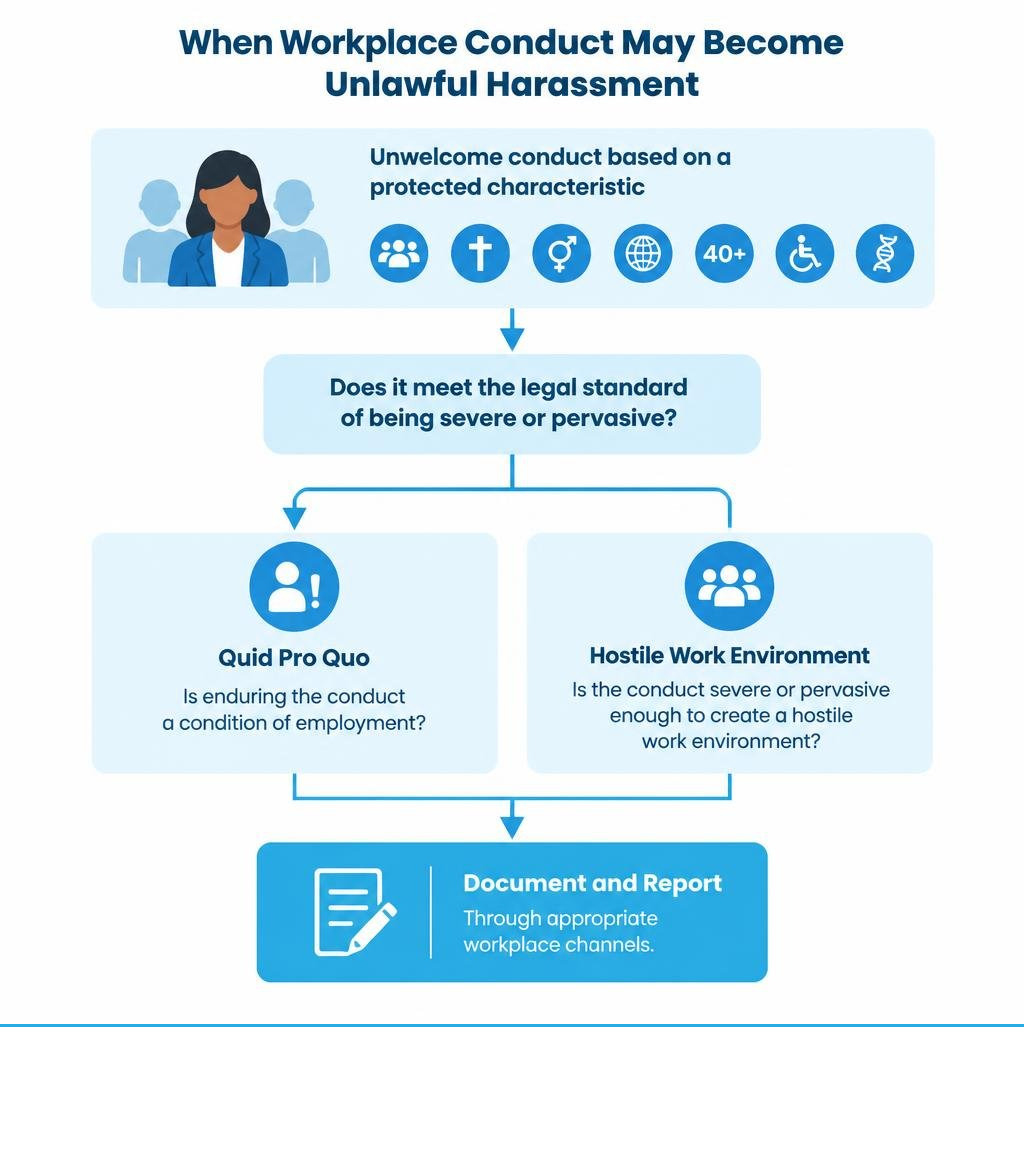
Workplace Harassment is a form of discrimination involving unwelcome conduct based on a protected characteristic. It becomes illegal when:
- Enduring it becomes a condition of employment (known as “quid pro quo” harassment).
- The conduct is severe or pervasive enough to create an intimidating, hostile, or abusive work environment.
Harassment can be verbal, visual, or physical. Examples include:
- Sexual Harassment: Unwelcome sexual advances, requests for sexual favors, or offensive comments about sex or gender. A national survey found 77% of women and 34% of men have experienced verbal sexual harassment.
- Non-Sexual Harassment: Offensive jokes, slurs, intimidation, mockery, or offensive images based on a protected characteristic. This includes online harassment or cyberbullying that contributes to a hostile work environment.
For more detailed information, the EEOC provides comprehensive guidance on Harassment.
Protected Characteristics Under Federal and State Law
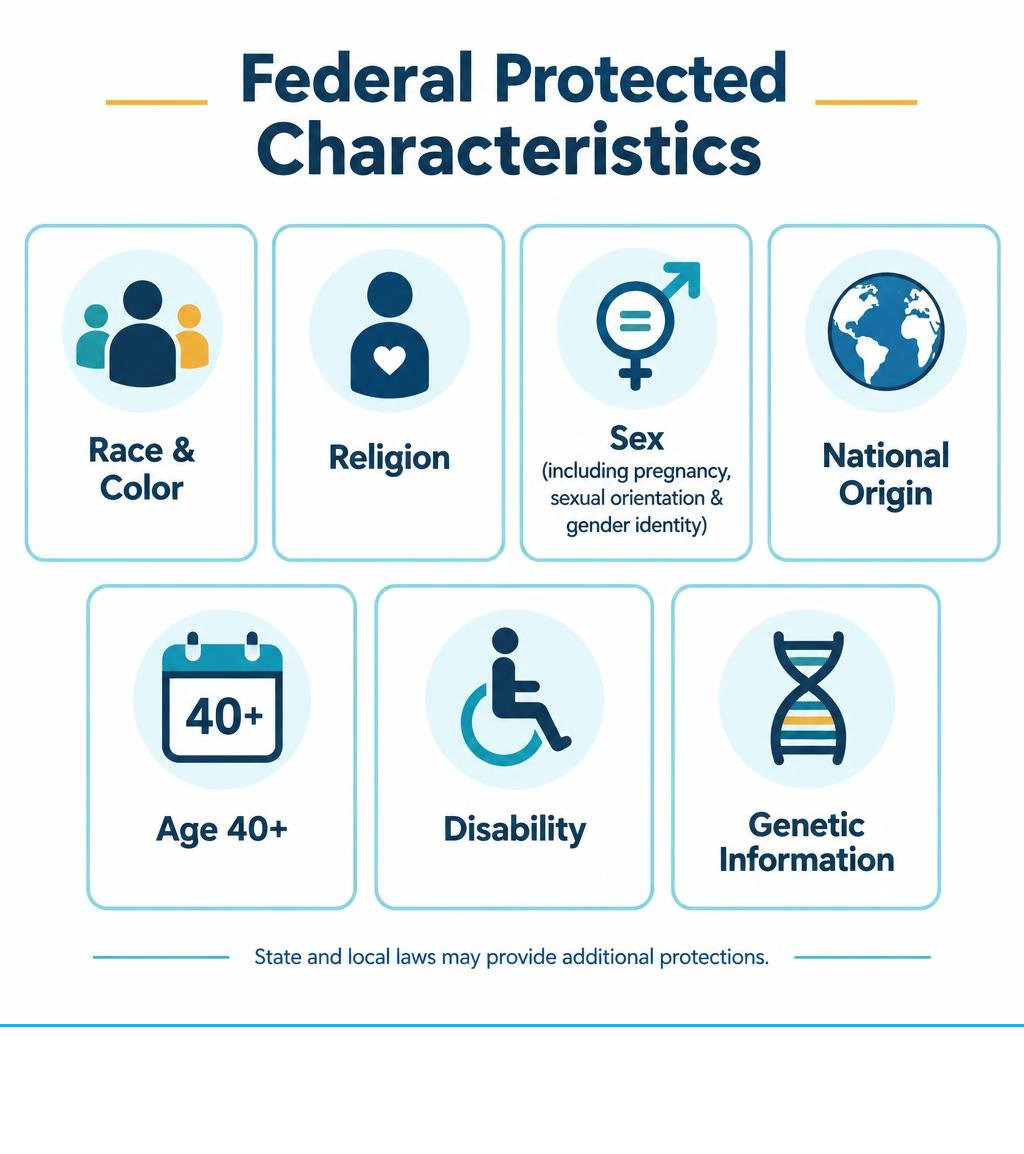
To combat anti discrimination and harassment, you must know which characteristics are legally protected. Federal laws, enforced by the EEOC, prohibit discrimination based on several key categories. Many states and localities, including California, New Jersey, and Colorado, provide even broader protections.
Here are the federally protected classes:
- Race & Color: Based on ancestry, physical traits, or skin tone.
- Religion: Includes religious beliefs and the need for reasonable accommodation.
- Sex: A broad category including pregnancy, gender identity, and sexual orientation.
- National Origin: Based on country of origin, ethnicity, or accent.
- Age (40 and over): Protected by the Age Discrimination in Employment Act (ADEA).
- Disability: Physical or mental impairments covered by the Americans with Disabilities Act (ADA), requiring reasonable accommodation.
- Genetic Information: Protection from discrimination based on genetic tests or family medical history.
Federal laws set a baseline, but many state and local laws offer broader protections, sometimes including marital or veteran status. Our training covers these specific state requirements to ensure full compliance.
The Legal Standard: When is Conduct “Severe or Pervasive”?
For unwelcome conduct to be illegal harassment, it must meet the legal standard of being “severe or pervasive.” This distinguishes unlawful behavior from minor annoyances or isolated incidents. It is important to note, the “severe or pervasive” standard is a United States federal standard that applies to most, but not all jurisdictions in the U.S.
Severe conduct is a single, egregious incident (like a physical assault or threat) that creates a hostile environment on its own.
Pervasive conduct is a pattern of less serious incidents that create a hostile environment over time (like repeated offensive jokes or insults).
Courts use a “totality of the circumstances” test, considering the frequency and severity of the conduct, whether it was physically threatening or humiliating, and how it impacted the employee’s work performance. The assessment is made from the perspective of a “reasonable person.”
Simple teasing, “petty slights,” or isolated incidents that aren’t extremely serious generally don’t qualify as illegal harassment. The law focuses on conduct that is so objectively offensive it alters the conditions of employment and interferes with an individual’s ability to do their job. Understanding this standard helps recognize when boundaries are crossed. Learning to intervene safely is also key, and you can find More info about Bystander Intervention Training to empower your team.
Taking Action: Reporting, Rights, and Employer Responsibilities
This section outlines the procedures for addressing violations, employee rights, and the crucial role employers play in prevention.
A Guide to Reporting Anti-Discrimination and Harassment Violations
Knowing how to report discrimination or harassment is crucial. The main federal agency for this is the Equal Employment Opportunity Commission (EEOC).
The EEOC Reporting Process: To file a “Charge of Discrimination,” you typically start with an online inquiry via the EEOC’s public portal. An EEOC staff member will then interview you to determine if a formal charge is appropriate. A charge is a signed statement asking the EEOC to take action.
Time Limits: Deadlines are strict. You generally must file a charge within 180 calendar days of the incident. This can extend to 300 days in states with their own anti-discrimination agencies.
State and Local Agencies (FEPAs): Many states have Fair Employment Practices Agencies (FEPAs). Filing with a FEPA often automatically files your charge with the EEOC as well.
Federal Employees and Contractors: The process is different for federal workers. Federal employees must contact their agency’s EEO office within 45 days. Federal contractors should contact the Office of Federal Contract Compliance Programs (OFCCP).
Lawsuits: Filing an EEOC charge is usually required before you can sue an employer in federal court. The EEOC may investigate and, if it doesn’t resolve the case, will issue a “Notice of Right to Sue,” allowing you to proceed with a lawsuit.
Understanding Retaliation and Protected Activities
A key protection against discrimination and harassment is the law against retaliation. Employees cannot be punished for exercising their legal rights.
What is Retaliation? It’s any adverse action an employer takes against an employee for engaging in a “protected activity,” such as complaining about discrimination.
Protected Activities include:
- Opposition: Complaining about discrimination, refusing a discriminatory order, or resisting sexual advances.
- Participation: Filing a charge of discrimination, being a witness in an investigation, or requesting a reasonable accommodation.
Examples of Retaliation include firing, demotion, negative reviews, exclusion from projects, or increased scrutiny.
Your Rights: It is illegal for an employer to retaliate, even if your original discrimination claim is not proven. If you believe you’ve been retaliated against, you can file a separate charge with the EEOC. This is a critical safeguard for those who report anti discrimination and harassment. Our Workplace Violence Prevention Training also helps organizations create secure environments.
Employer Best Practices for Anti-Discrimination and Harassment Prevention
Proactively preventing anti discrimination and harassment is a legal and strategic necessity for employers. It limits liability, boosts morale, and increases productivity.
Employer Liability:
- By Supervisors: An employer is automatically liable if a supervisor’s harassment results in a negative employment action (like termination). If it creates a hostile environment without such action, the employer may avoid liability if they can prove they took reasonable steps to prevent/correct it and the employee failed to use available reporting systems.
- By Co-workers/Third Parties: Employers are liable if they knew (or should have known) about the harassment and failed to take prompt, appropriate action.
Key Components of an Effective Policy: A strong policy is the foundation of prevention. It must be clear, comprehensive, widely distributed, and regularly updated. It should state a clear commitment to a workplace free from discrimination and harassment, and that violations will lead to disciplinary action, up to and including termination.
Clear Reporting Procedures: Your policy must include:
- Multiple reporting channels (e.g., supervisor, HR).
- An option to bypass a supervisor who is the alleged harasser.
- An assurance of confidentiality to the extent possible.
- A strict non-retaliation clause.
Disciplinary Measures: Clearly state that violations will result in disciplinary action, from counseling to termination, depending on the severity.
Proactive Prevention:
- Training: Conduct regular, interactive anti discrimination and harassment training for all employees and managers. Our Anti-Discrimination and Harassment Training provides engaging solutions.
- Leadership: Ensure senior leaders champion a respectful culture.
- Action: Investigate all complaints promptly and impartially, and take effective corrective action when needed.
By implementing these best practices, employers can create a workplace where anti discrimination and harassment are not just legal requirements, but integral parts of the organizational culture.

About EEO Training LLC
EEO Training LLC combines HR expertise, years of workplace complaint investigation and training experience, legal knowledge, and technology to deliver online anti-discrimination, anti-sexual harassment, workplace violence prevention, and bystander intervention training. Its integrated learning management system helps organizations administer training and manage compliance activities in one place.
Workplace harassment and discrimination compliance is the company’s sole focus. EEO Training LLC monitors legislative developments across the United States, Canada and the United Kingdom to help its training support federal, state, and local compliance needs.
Key reasons organizations choose EEO Training LLC include:
- A specialized focus on anti-harassment and anti-discrimination training.
- Original animated-character vignettes designed to create a more engaging learning experience.
- An easy-to-use administrative dashboard with on-demand reports, employee updates, and client customization options.
- Responsive, quality-focused customer service.
About the Author: Andrew Botwin
Andrew Botwin, Esq., AWI-CH, SPHR, SHRM-SCP, PCC, MBA, is the CEO of EEO Training LLC and a workplace investigator, executive coach, and trainer with more than 30 years of experience. His work includes neutral, independent investigations of workplace EEO claims and training on sexual harassment, discrimination, unconscious bias, workplace violence prevention, and bystander intervention.
Andrew holds a Juris Doctor from Rutgers School of Law, an MBA focused on human resource management from Fairleigh Dickinson University, and SPHR and SHRM-SCP credentials. His practical experience in investigations, HR, and workplace-compliance training informs the guidance in this article, helping employers turn legal standards into clear prevention and response practices.
