
Active Shooter Awareness Training: A Workplace Preparedness Guide

Why Active Shooter Awareness Training Matters
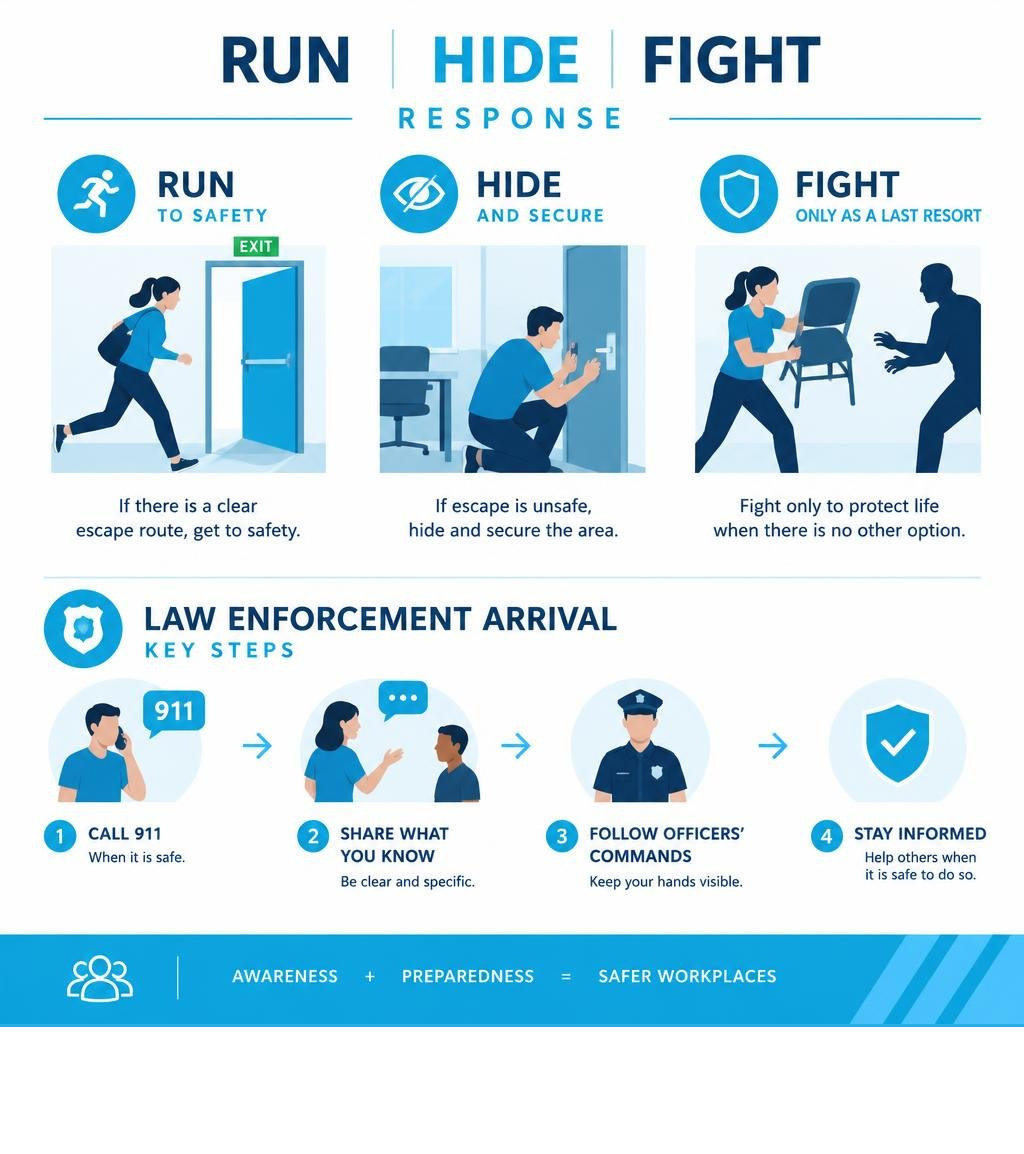
Active Shooter Awareness Training helps people make fast, safer decisions during a violent emergency: run to safety when a clear escape route exists, hide and secure the area when escape is unsafe, and fight only as a last resort to protect life. Call 911 when it is safe, share what you know, and follow responding officers’ commands.
The FBI defines an active shooter as one or more people actively trying to kill people in a populated area. These events are unpredictable and can change in seconds. They often end within 10 to 15 minutes, sometimes before law enforcement arrives, which makes advance planning vital.
Past attacks at Columbine High School, Virginia Tech, and Northern Illinois University show the lasting human impact of targeted violence. Clear plans, practiced response options, early reporting of concerning behavior, and trauma-informed recovery can help organizations protect people before, during, and after a crisis.
I’m Andrew Botwin, founder of Strategy People Culture, LLC, an executive coaching and leadership consulting firm founded in 2012, and founder of EEO Training; my more than 30 years of leadership, HR, workplace investigation, and compliance experience inform a practical approach to Active Shooter Awareness Training. This guide focuses on preparedness that supports both people and sound organizational risk management.
The Core Principles of Active Shooter Awareness Training
Preparing an organization for an active threat requires shifting from denial to structured, strategic readiness. In a crisis, individuals do not rise to the occasion; they sink to the level of their training. When leaders foster situational awareness, employees gain the confidence needed to evaluate their surroundings, recognize danger early, and take immediate defensive action.
Federal agencies emphasize that rapid decision-making saves lives. Rather than relying on rigid, single-track mandates, effective preparedness provides a flexible framework that accounts for multi-threat mitigation, ranging from firearms to edged weapons or improvised devices.
The Run, Hide, Fight Response Protocol
The cornerstone of modern civilian response is the Run, Hide, Fight methodology. This decision framework empowers individuals to choose the best survival strategy based on real-time circumstances:
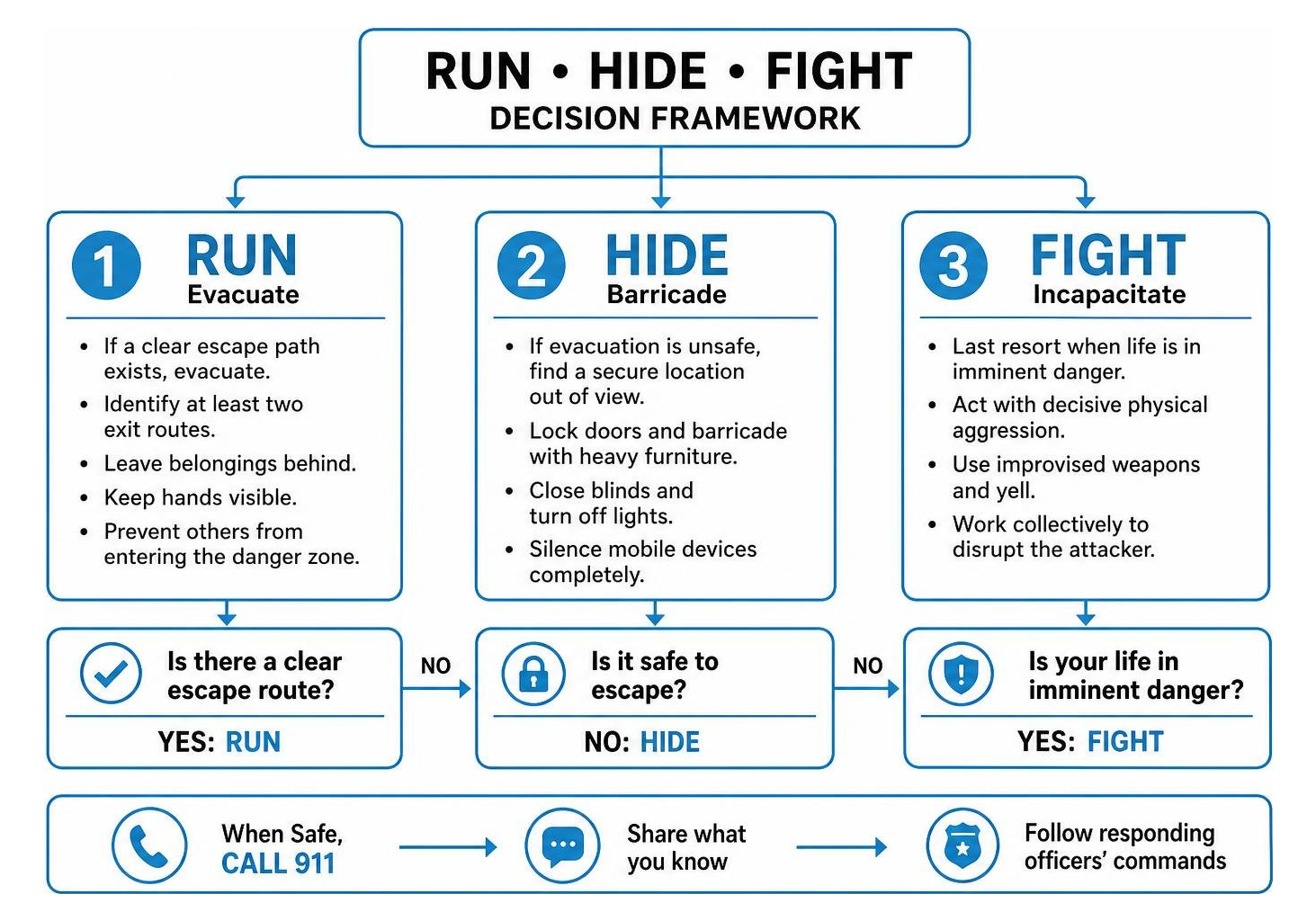
- Run (Evacuate): If there is an accessible escape path, attempting to evacuate is the primary priority. Individuals should identify at least two secondary exit routes, leave personal belongings behind, keep their hands visible, and prevent others from entering the danger zone.
- Hide (Barricade): If safe evacuation is impossible, find a secure location out of the shooter’s view. Lock doors, reinforce them by barricading heavy furniture against entry points, close blinds, turn off lights, and silence mobile devices completely (vibrate mode can still give away a location).
- Fight (Incapacitate): As an absolute last resort when life is in imminent danger, commit to disrupting or incapacitating the shooter. Act with decisive physical aggression, improvise weapons using office items (fire extinguishers, chairs, heavy objects), yell, and work collectively to overcome the attacker.
Comprehensive planning aligns with the Active Shooter Preparedness Action Guidance issued by federal agencies. Leaders often ask whether structured safety courses are necessary; exploring active shooter training for employees confirms that proactive preparation dramatically reduces panic and confusion during unexpected crises.
Law Enforcement Arrival and Critical First Aid Priorities
When law enforcement arrives on the scene, their primary mission is not immediate rescue or first aid—it is to locate and neutralize the threat. Tactical teams often enter in formations, wearing heavy gear, carrying rifles, and giving loud, direct commands.
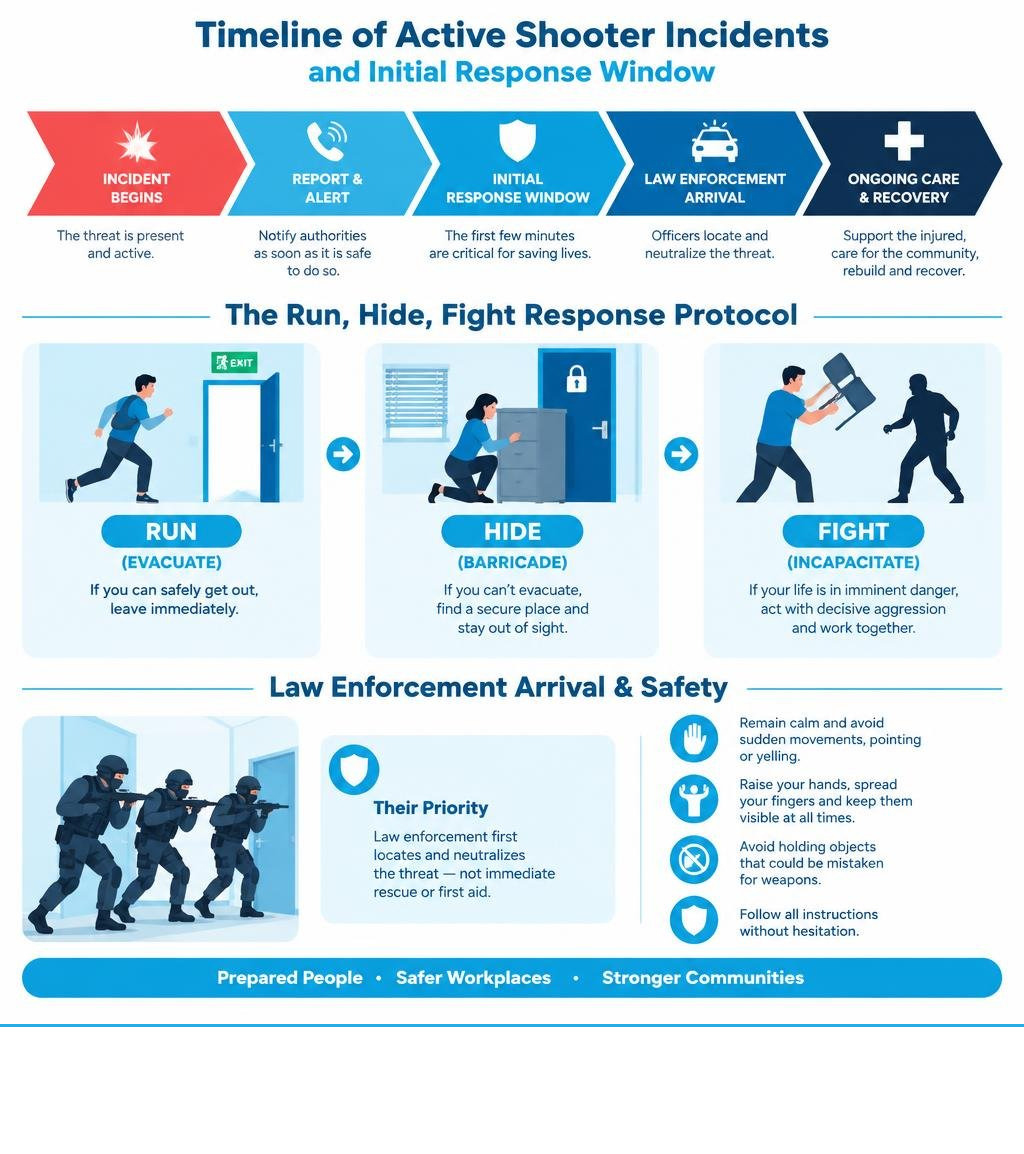
To ensure personal safety when officers enter the area:
- Remain calm and avoid sudden movements, pointing, or yelling.
- Immediately raise your hands, spread your fingers, and keep them visible at all times.
- Avoid holding objects such as phones, bags, or jackets that could be mistaken for weapons.
- Follow all instructions without hesitation, understanding that initial responders will bypass injured individuals to reach the shooter.
Once the threat is suppressed or while sheltered in place, civilian intervention becomes crucial for treating life-threatening injuries. Severe hemorrhage is a leading cause of preventable death in mass-casualty events. Applying direct pressure to heavy bleeding, packing wounds, and utilizing tourniquets from trauma kits before professional medical personnel arrive mirrors foundational bystander intervention protocols, transforming bystanders into immediate responders who save lives.
Designing Effective Active Shooter Awareness Training for Employees
Training programs must bridge the gap between civilian instinct and first responder tactics. Scenario-based learning and interactive tabletop exercises allow teams to rehearse decisions without inducing trauma.
| Civilian Response Protocols | Law Enforcement Operational Priorities |
|---|---|
| Run: Evacuate immediately if a safe path exists; leave items behind. | Direct Threat Neutralization: Locate and engage the shooter rapidly. |
| Hide: Lock, barricade doors, silence phones, stay out of sightlines. | Scene Containment: Establish perimeters and coordinate tactical assets. |
| Fight: Use improvised weapons and decisive action as a last resort. | Clearance & Security: Methodically search and secure structures. |
| First Aid: Apply direct wound pressure and tourniquets to stop bleeding. | Triage & Extraction: Escort medical personnel into cleared warm zones. |
Practical Do’s, Don’ts, and Personal Readiness
Active shooter awareness training should give employees usable choices—not a false sense of certainty. In addition to defining an active shooter and explaining common safety concepts, effective instruction increases awareness of changing conditions, reinforces the importance of an emergency plan, and helps workers prepare before an event occurs.
Key readiness steps include:
- Know your workplace’s evacuation routes, designated assembly locations, and the locations of rooms that can be locked or barricaded.
- Keep emergency contacts current, learn how your organization communicates urgent alerts, and report credible threats or concerning behavior through established channels.
- During an incident, do not stop to collect personal belongings, post updates on social media, or open a door for an unknown person. Move away from danger when a safe route exists, stay quiet and out of sight when sheltering, and call 911 when it is safe to do so.
- If you evacuate, keep your hands visible and follow officers’ instructions. Avoid sudden movements, pointing, or holding objects that could be mistaken for a weapon.
- Prepare yourself in advance by thinking through how you would respond in the areas you use most often—including entrances, parking areas, meeting rooms, and remote work locations where you may need to contact local emergency services.
The goal is not to turn employees into first responders. It is to build worker readiness: recognizing danger, using the Run, Hide, Fight framework when necessary, following basic safety protocols, and making the best available decision under pressure.
Organizational education should also align with national standards like Active Shooter: What You Can Do | CISA. Emergency action plans must be accessible, accounting for individuals with disabilities, neurodivergent staff, and multilingual workforce requirements.
Implementing Organizational Preparedness and Incident Recovery
Building a resilient organization requires executive oversight that combines physical security, proactive threat management, and comprehensive post-incident recovery plans.

Threat Recognition, Prevention, and Behavioral Assessment
Targeted violence rarely occurs in a vacuum; attackers typically exhibit noticeable warning signs long before an incident unfolds. Organizations must implement Behavioral Threat Assessment (BTA) programs to identify, assess, and manage escalating risks early.
Key behavioral warning indicators include:
- Uncharacteristic bursts of hostility, rage, or escalating interpersonal grievances.
- Fascination with past mass shootings, weapons, or violent manifestos.
- Sudden, severe deterioration in work performance coupled with extreme personal hygiene neglect or substance abuse.
- Explicit or veiled threats against supervisors, coworkers, or company leadership.
- Intense feelings of persecution or perceived workplace injustices.
Integrating robust workplace violence prevention training allows managers and colleagues to recognize these markers safely. Aligning internal policies with current workplace violence training requirements ensures that organizations maintain compliant, transparent, and trusted reporting channels where concerns can be investigated without retaliation.
Organizational Compliance and Active Shooter Awareness Training Programs
A complete Emergency Action Plan (EAP) contains defined evacuation routes, secure shelter locations, reliable mass-notification systems, facility access control, and designated post-evacuation assembly areas for accountability.
What Active Shooter Awareness Training Should Cover
EEO Training’s course covers these topics and more:
- Defining the term active shooter and increasing awareness of active shooter situations.
- Explaining basic active shooter safety concepts and building worker readiness for an emergency.
- Emphasizing the importance of an emergency plan, clear communication, and accessible reporting channels.
- Teaching foundational safety protocols, including evacuation, securing a space, and calling 911 when it is safe to do so.
- Explaining the Run, Hide, Fight framework and how to apply it based on the immediate circumstances.
- Preparing employees for likely scenarios through practical do’s and don’ts, including leaving personal items behind, staying quiet when sheltering, and avoiding unknown doors or unsafe areas.
- Showing employees how to interact with law enforcement by keeping their hands visible, avoiding sudden movements, and following instructions.
- Providing practical guidance that helps each person prepare ahead of time by learning exits, assembly locations, emergency alerts, and local emergency-contact procedures.
Well-designed training uses realistic, trauma-informed examples and makes clear that employees are not expected to become first responders. The purpose is to give people safer options, reinforce the value of a plan, and help them make the best decision they can in a rapidly changing emergency.
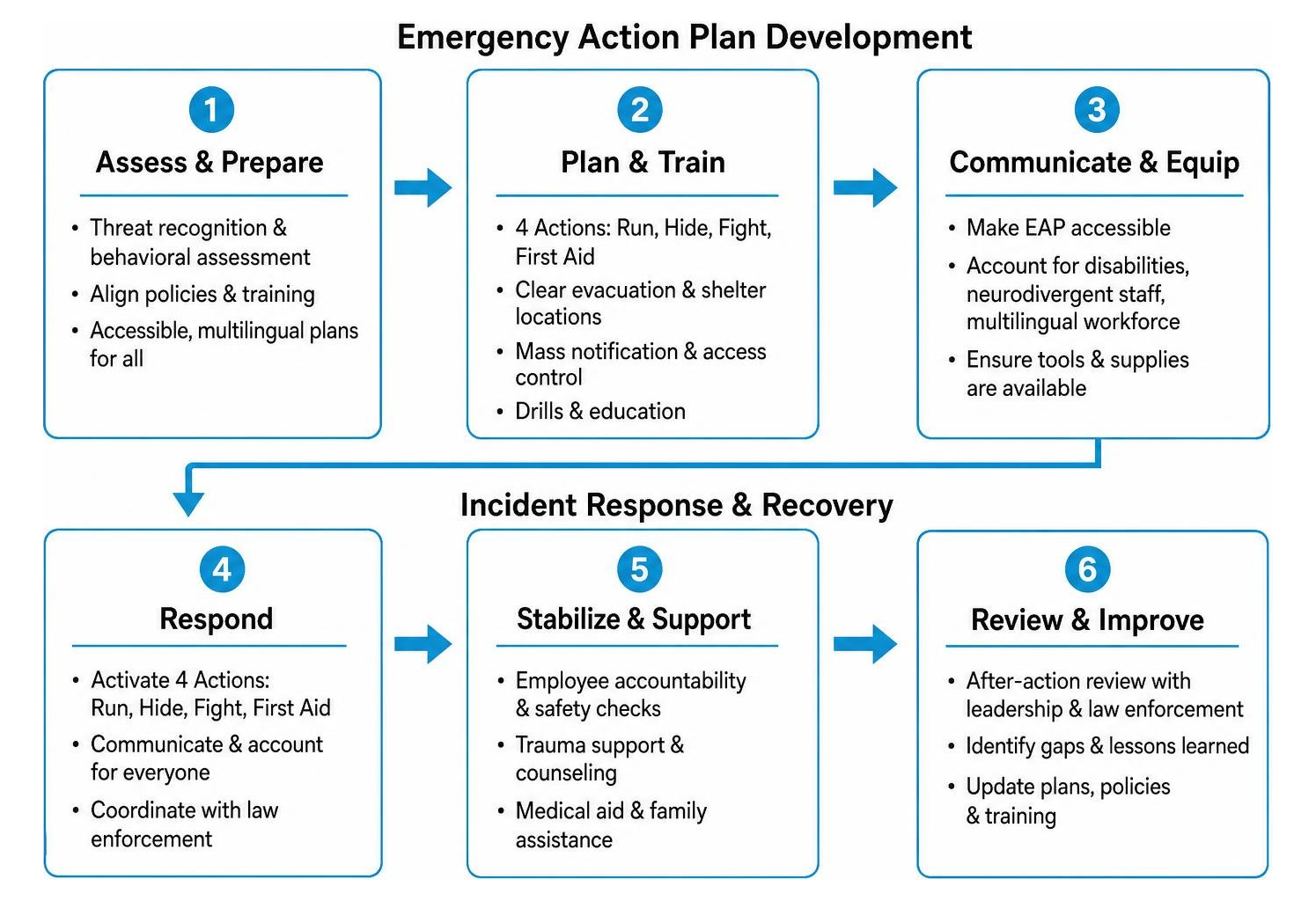
Following an event, the focus shifts toward consequence management:
- Employee Accountability: Rapidly roster staff to confirm safety and account for missing persons.
- Trauma Support: Deploy psychological first aid and long-term counseling to support employees and their families through grief and trauma recovery.
- After-Action Review: Collaborate with law enforcement and leadership to evaluate the response, identify operational gaps, and update safety protocols.
Leveraging authoritative tools from the Active Shooter Safety Resources provided by federal agencies reinforces your risk posture.
At EEO Training LLC, we deliver high-impact compliance solutions, featuring 100% original video content, animated character vignettes, and an intuitive administrative dashboard that simplifies deployment, tracking, and reporting. Implementing our specialized Active Shooter Awareness Training equips your workforce with the life-saving knowledge and actionable skills needed to stay prepared, confident, and secure.
