
What Counts as a Hostile Work Environment and How to Spot It

When Does an Coworker Cross the Line? Understanding Hostile Work Environments
A coworker creating a hostile work environment is more than just indicative of bad management — it’s a serious legal issue under federal law.
Here’s a quick answer to what that actually means:
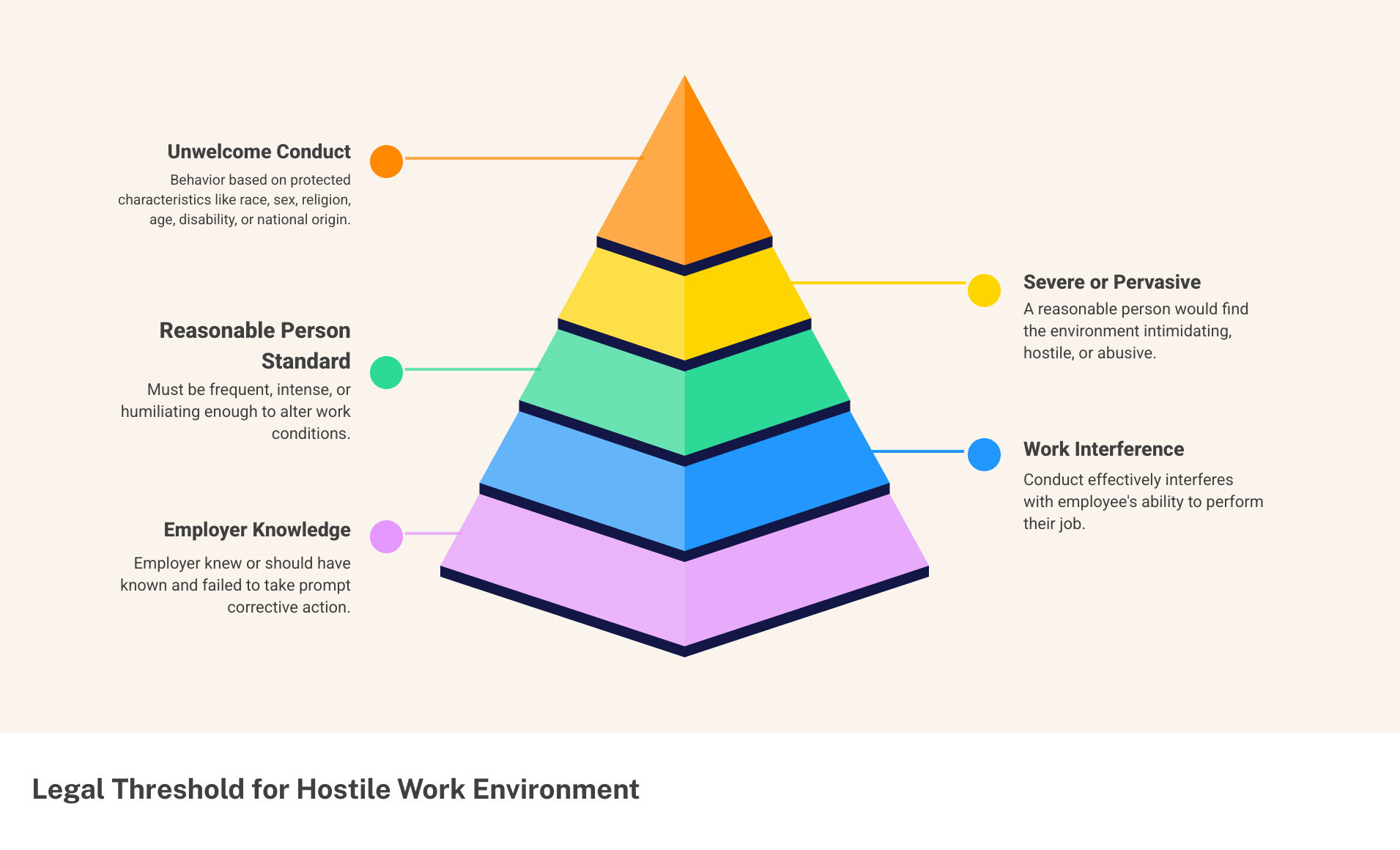
A hostile work environment exists when:
- Unwelcome conduct is based on a protected characteristic (race, sex, religion, age, disability, national origin, etc.)
- For most U.S. jurisdictions, the behavior is severe or pervasive enough that a reasonable person would find it intimidating, offensive, or abusive
- The conduct interferes with an employee’s ability to work
- The employer knew or should have known about it and failed to act
According to the U.S. Equal Employment Opportunity Commission (EEOC), workplace harassment becomes unlawful when enduring it becomes a condition of employment — or when it creates an environment a reasonable person would consider hostile or abusive.
This isn’t just an HR problem. It’s a legal liability, a retention risk, and a culture crisis all at once. Research shows that 30% of employees who experience harassment have left their organization because of it — and 42% never report it at all.
The challenge? Many employers don’t realize they’re already exposed. A pattern of offensive jokes, repeated microaggressions, or a manager who retaliates against complaints can all cross the legal line — even without a single dramatic incident.
This guide breaks down exactly what qualifies, what doesn’t, and what every HR professional and business leader needs to know to stay compliant and protect their people.
Defining an Employer Creating a Hostile Work Environment

When we talk about an employer creating a hostile work environment, we aren’t just talking about a boss who is “mean” or a workplace that feels a bit “tense.” Legally, the term has a very specific meaning rooted in federal civil rights protections.
The primary authority on this in the United States is the U.S. Equal Employment Opportunity Commission (EEOC). Under the Civil Rights Act of 1964 (Title VII), harassment is a form of employment discrimination. It doesn’t just apply to race or sex; it covers any protected characteristic including religion, national origin, age (federally as 40 or older), disability, or genetic information.
To meet the legal standard, the behavior must be unwelcome. This means the employee did not solicit or invite the conduct and regarded it as undesirable or offensive. Furthermore, the EEOC Harassment Guidance notes that the conduct must be either severe or pervasive.
- Severe: A single, extremely serious incident (like a physical assault or a highly offensive racial slur) can be enough to create a hostile environment.
- Pervasive: A pattern of less-serious incidents (like daily “jokes” or constant microaggressions) that, when taken together, create an abusive atmosphere.
At EEO Training, we believe the best way to prevent these issues is through comprehensive Anti-Discrimination and Harassment Training. Understanding these definitions is the first step toward building a culture of respect.
Legal Requirements for an Employer Creating a Hostile Work Environment
Courts such as the United States Supreme Court and agencies like the EEOC don’t just take one person’s word for it; they use the reasonable person standard. This asks: Would a reasonable person in the same situation find the environment intimidating, hostile, or abusive?
It is also important to distinguish between a legally hostile environment and general workplace conflict. An employer is generally not liable for “petty slights” or “annoyances” unless they are tied to a protected trait.
| Feature | Legally Hostile Work Environment | General Workplace Conflict |
|---|---|---|
| Basis | Tied to a protected class (race, sex, age, etc.) | Personal dislike, differing work styles |
| Severity | Severe or pervasive | Minor or occasional |
| Impact | Interferes with work performance | Annoying but work continues |
| Legal Standing | Violates Title VII, ADA, or ADEA | Typically does not violate federal (or local) law |
As outlined in the Workplace Harassment Fact Sheet, harassment becomes unlawful when enduring it is a condition of employment or when the conduct is severe enough to alter the terms and conditions of the victim’s job. If a supervisor’s harassment results in a tangible employment action—such as firing, demotion, or a loss of pay—the employer is often automatically liable.
Common Signs and Red Flags of a Hostile Workplace
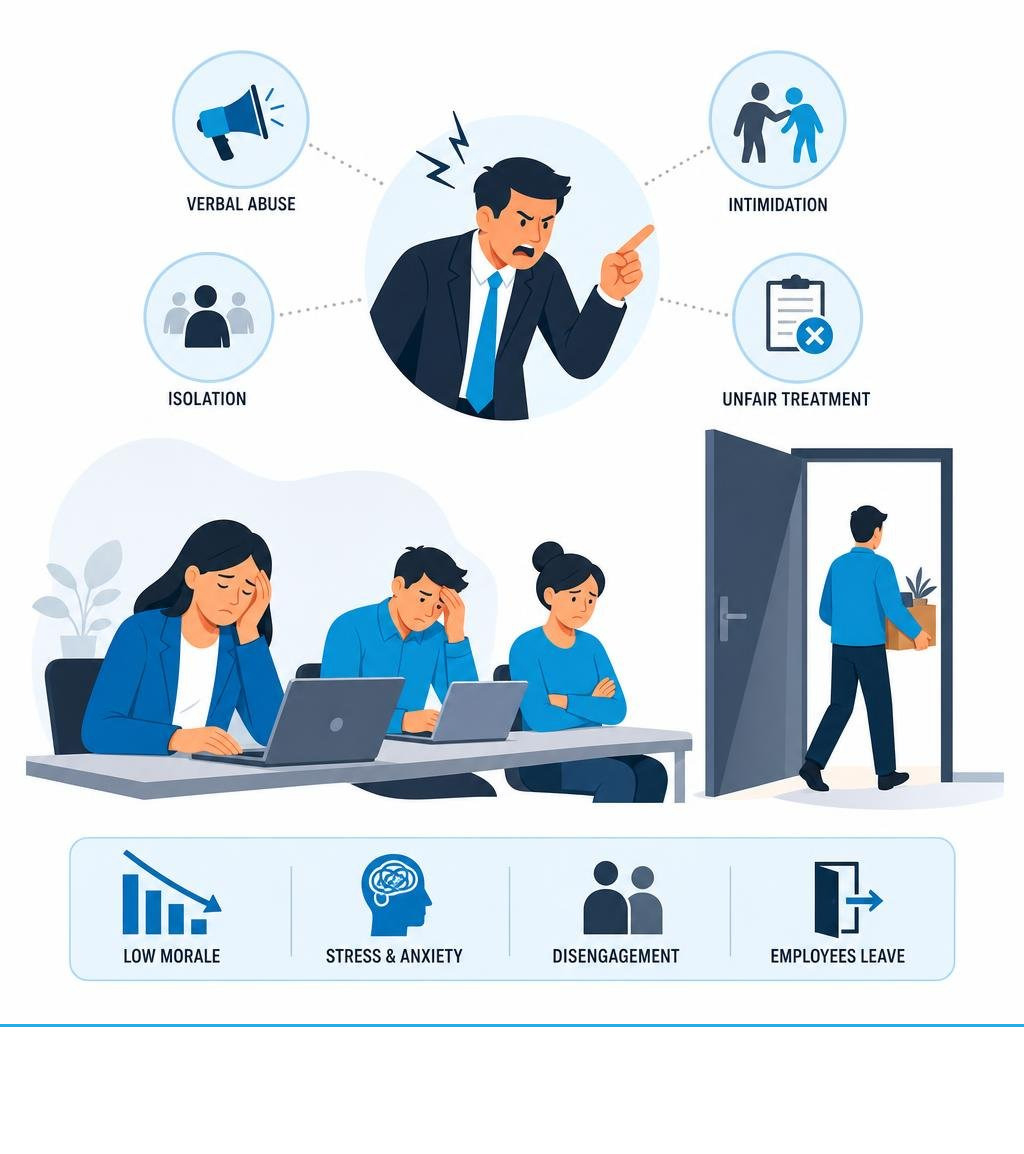
Identifying a hostile work environment early can save a company from devastating legal and cultural consequences. Here are some of the most common red flags that an employer creating a hostile work environment might be present:
- Repeated Slurs and Offensive Jokes: Using derogatory language related to race, gender, or religion is a major red flag. Even if the harasser claims they are “just joking,” the impact on the victim is what matters.
- Offensive Displays: This includes racist cartoons, sexually suggestive images, or hate symbols (like nooses or swastikas) being shown in the workplace or on digital platforms.
- Physical Intimidation: Blocking someone’s path, inappropriate touching, or making threats of physical harm.
- Misgendering and Deadnaming: Intentionally and repeatedly using the wrong pronouns or names for transgender employees can contribute to a hostile environment.
- Power Imbalances: A manager using their authority to pressure subordinates into dates or uncomfortable social situations.
- Exclusionary Tactics: Purposefully leaving certain employees out of meetings, emails, or professional development opportunities based on their protected characteristics.
We often recommend Bystander Intervention Training to empower employees to speak up when they witness these behaviors. When coworkers feel comfortable calling out “minor” issues, it prevents them from escalating into legal nightmares.
What Does Not Qualify as a Hostile Environment
It’s just as important to know what isn’t a hostile work environment. Federal law is not a “general civility code.” This means that being a “jerk” isn’t necessarily illegal.
- Petty Slights and Annoyances: A coworker forgetting to invite you to a casual lunch or a messy breakroom sink generally doesn’t count.
- Isolated Incidents: A single offhand comment or one-time teasing incident usually isn’t enough to reach the “severe or pervasive” threshold unless it involves something extreme like physical violence.
- Performance Feedback: A manager giving a negative performance review, setting strict deadlines, or micromanaging isn’t creating a hostile environment unless they are doing it because of your race, sex, or another protected trait.
- Personality Clashes: Simply not liking your boss or having a different communication style doesn’t make the environment legally hostile.
For more clarity on specific scenarios, you can check out our FAQs.
Preventing and Addressing Workplace Hostility

Once an employer is aware of potential harassment, they have a legal obligation to act. “Awareness” doesn’t just mean a formal HR report; if a manager sees it happening or hears rumors, the company is often considered “on notice.”
Employer liability depends on who is doing the harassing:
- Supervisor Harassment: If the harassment results in a tangible employment action (like being fired), the employer is automatically liable. If no action was taken, the employer can sometimes defend itself by proving it had a policy in place and the employee failed to use it.
- Non-Supervisor/Third-Party Harassment: The employer is liable if they knew or should have known about the conduct and failed to take prompt remedial action. This includes harassment by coworkers, clients, or even vendors.
To stay ahead of these risks, employers must follow Sexual Harassment Training Requirements All 50 States. In places like California, the California Civil Rights Department has strict processes for reporting and investigating these claims.
Root Causes of an Employer Creating a Hostile Work Environment
Why does hostility take root in the first place? It usually isn’t just one “bad apple.” It’s often a systemic issue.
- Organizational Culture: If leadership tolerates “locker room talk” or aggressive behavior, it trickles down. When there is no leadership accountability, harassment thrives.
- Lack of Training: Employees and managers often don’t know where the line is. Without regular education, behaviors that were “acceptable” twenty years ago continue unchecked.
- Economic Stress: High-pressure environments can lead to lashing out, and if not managed, this can target vulnerable populations.
- Remote Work Mismanagement: Harassment hasn’t gone away with the rise of Zoom; it has just moved to Slack and private chats. Mismanaged remote interactions can lead to isolation and unchecked bullying.
- Systemic Bias: Unconscious biases in hiring and promotion can create “in-groups” and “out-groups,” leading to the exclusion of protected classes.
Implementing Workplace Violence Prevention Training is a great way to address the more aggressive end of this spectrum before it becomes a physical safety risk.
Steps for Employees to Report and Document Conduct
If you find yourself in a situation where you believe your employer is creating a hostile work environment, you should act.
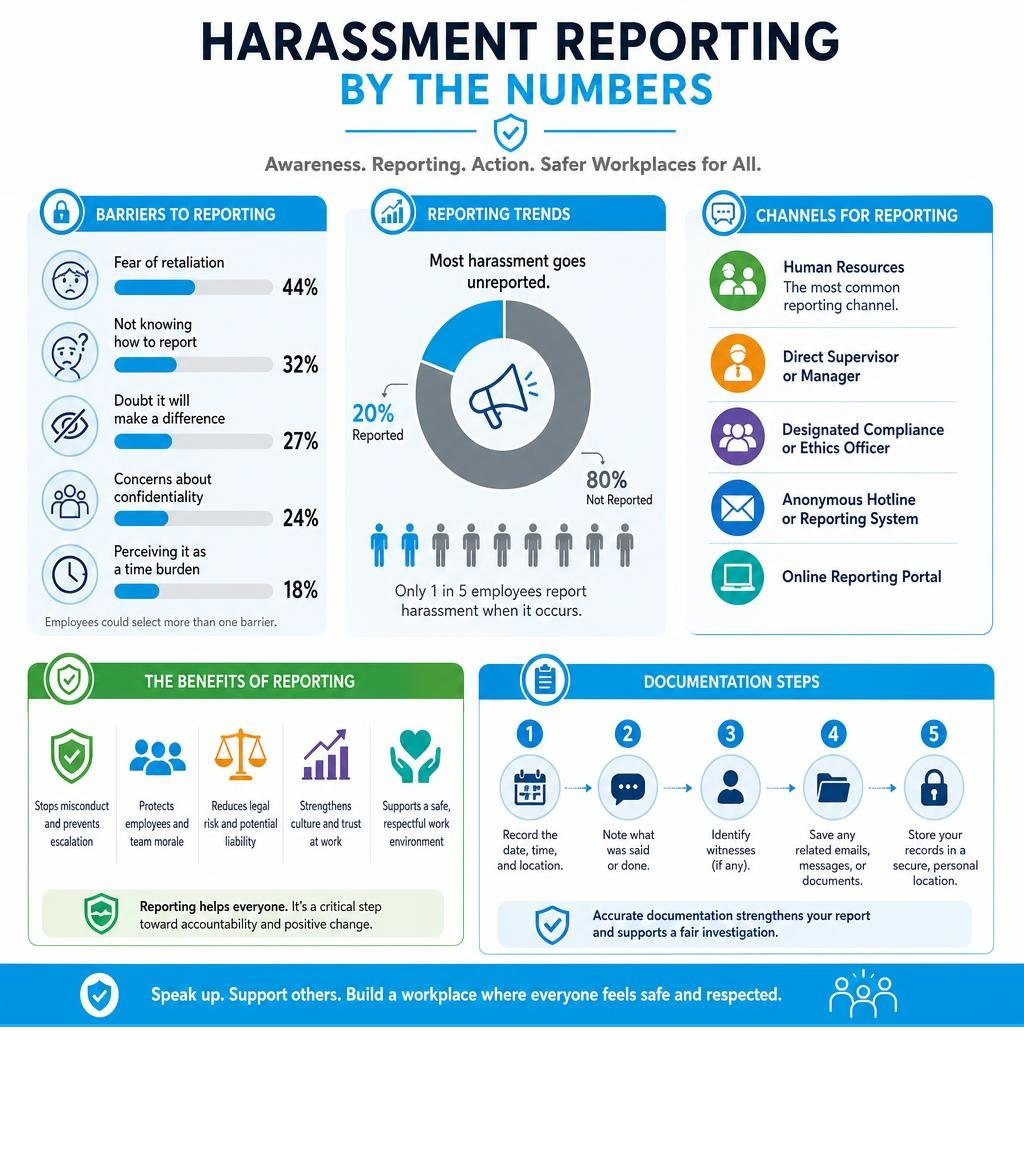
- Communicate Unwelcomeness: If safe, tell the harasser the behavior is unwelcome and must stop.
- Document Everything: Keep a detailed log of dates, times, locations, what was said/done, and who witnessed it. Store this log in a secure, personal location—not on your work computer.
- Follow Internal Procedures: Check your employee handbook. If you are unaware of internal procedures, report them to HR or a supervisor as soon as possible.
For companies operating in multiple regions, Navigating Multi-State Compliance is essential to ensure that reporting procedures meet local laws in every office.
Conclusion: Building a Culture of Compliance
An employer creating a hostile work environment faces more than just a lawsuit; they face a broken team. When 72% of employees say they would feel more comfortable reporting issues anonymously, it tells us that trust is the most valuable currency in the modern workplace.
At EEO Training, we help you build that trust. Our innovative training features 100% original video content that moves beyond boring slides and into real-world scenarios. We provide the tools for leadership transparency, anonymous reporting, and psychological safety.
Don’t wait for a complaint to land on your desk. Take a proactive stance against workplace hostility today. A zero-tolerance policy only works if everyone knows what “zero” looks like.
Ready to protect your team and your business? Enroll in Anti-Discrimination and Harassment Training today and start building a safer, more inclusive workplace.
